
Make your child easy to see, keep a grown-up's hand within reach, and check the candy before any of it gets eaten. The checklist below covers the costume, the walk and the candy sort, with each safety fact named to the group it comes from: Safe Kids, the CPSC and Weill Cornell.
Screenshot it or print it, and run through it on Halloween afternoon. It takes about 15 minutes.
Before you leave the house
The costume
- Light colors where you can. Safe Kids suggests choosing light colors and decorating costumes and bags with reflective tape or stickers.
- One strip of reflective tape on the front, one on the back, one on the treat bag.
- Face paint instead of a mask. Safe Kids recommends face paint and makeup instead of masks that limit sight.
- No baggy sleeves or billowing skirts. The CPSC advises avoiding both, and keeping costumes away from candles.
- If you bought the costume, look for a "Flame Resistant" label. The CPSC notes this "doesn't mean costumes won't burn", so keep your child away from open flames anyway.
- A walk test in the hallway. Can your child walk, climb a step and see straight ahead without the hat slipping down?
What to carry
- A glow stick for your child and a flashlight for you. Safe Kids suggests carrying glow sticks or flashlights.
- A small snack from home, so nobody eats from the treat bag on the walk.
- A familiar spare layer, in case the costume gets itchy or cold.
- Your phone, charged.
- An empty bag for the pieces you will swap out later.
Your own porch
- Light jack-o'-lanterns with battery lights, not candles, as the CPSC recommends.
- If you carve, a grown-up holds the tools. The CPSC says adults, not kids, should use carving tools, and it reports that 48% of Halloween emergency room visits are related to pumpkin carving.
- Clear the steps of shoes, toys and hoses before the doorbell starts.
On the walk
- A grown-up goes along. Safe Kids says adults should accompany children under 12.
- Hold hands at every curb, driveway and crossing.
- Know when it gets busy. Safe Kids lists peak hours as 5:30 to 9:30 PM. With a 3-to-6-year-old, an earlier, shorter loop inside your town's official hours is easier on everyone.
- Stay on the sidewalk and visit houses with a porch light on.
- Treats are collected at the door. Nobody goes inside a house.
- Agree on a go-home word before you start, and use it as soon as anyone is tired, cold or scared.
When you get home: the candy check
Do this at the kitchen table before anything gets eaten. For children 4 and under, Weill Cornell advises removing:
- Gum
- Hard candy
- Gooey or sticky candy
- Peanuts
- Toys with small parts
Swap the removed pieces for something that works, like a sticker, a new crayon or one treat you have already checked. With a 5- or 6-year-old, sort the bag together so they see what goes and why.
If your child has a food allergy, check every label against their own allergy plan before they eat anything. FARE says about 1 in 13 US children has a food allergy, roughly two in every classroom. Its Teal Pumpkin Project invites homes to offer non-food treats such as glow sticks and bubbles, so a teal pumpkin on a porch is a good sign. If you are unsure what is safe for your child, ask your pediatrician.
Talk about it
- "Where should the shiny tape go so cars can see you?"
- "What do we do at the curb?" (Stop and hold hands.)
- "What's our go-home word tonight?"
- "Can you help me sort the candy into 'now', 'later' and 'grown-up' piles?"
More from Storytime Crayons
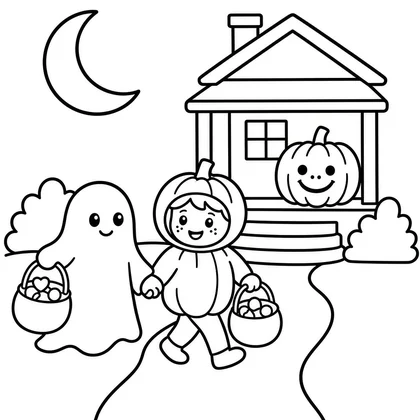
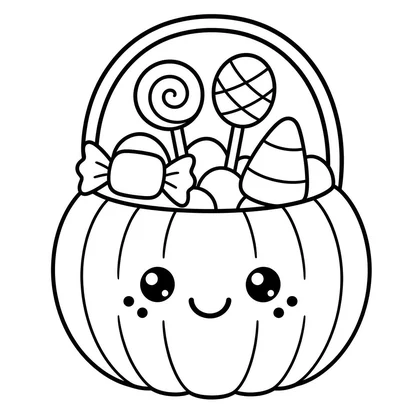
Before the big night, color our free coloring pages of a trick-or-treat walk and a candy bucket together and talk through each step of this checklist as you go.
Quick answers
What candy should I take away from a 3-year-old?
For children 4 and under, Weill Cornell advises removing gum, hard candy, gooey or sticky candy, peanuts and toys with small parts. Swap them for a sticker or a new crayon.
Should my preschooler wear a mask?
Safe Kids recommends face paint and makeup instead of masks that limit sight. A painted nose and whiskers do the same job without blocking the view.
What does a teal pumpkin on a porch mean?
It is part of FARE's Teal Pumpkin Project. A teal pumpkin means the home offers non-food treats, such as glow sticks or bubbles, so children with food allergies can join in.
Free pages to go with this
Sources
- Safe Kids Worldwide: Halloween safety tips
- CPSC: Halloween safety tips for selecting costumes and decor
- CPSC: On a day for goblins and tricks, make safety a treat
- Weill Cornell Medicine: Halloween food safety tips for parents
- FARE: The Teal Pumpkin Project
This guide is general information for families, not medical advice. Ask your child's pediatrician about any health concern.